

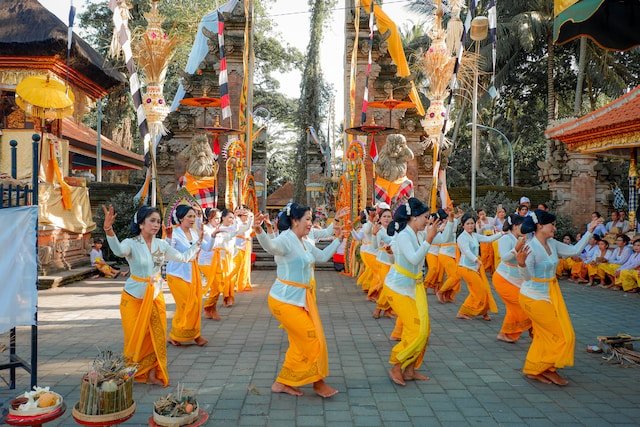
Bali has much to offer in terms of its cultural practices and unique traditions. Everyday life in Bali consists of daily activities like placing morning offerings in the front corners of houses and organising grand ceremonies which involve the whole community. The traditions of Bali can be closely observed during meals in various family-owned warungs. To dive deeper into the world of Bali, local ceremonies and cafes were my starting point.
Why Bali’s daily rituals feel so special
The majority of people living on the island practice Hinduism, and their faith influences every aspect of their lives. Women prepare offerings before daybreak at their homes, stores, and temples. This routine contributes to Bali’s calm surroundings. Travellers who take a moment to look around will notice every detail: holy water, bells, and bowing.
Canang sari, the tiny Bali offerings found everywhere
Canang sari is a small tray made of palm leaves that is decorated with rice, flowers, and incense. Locals put canang sari on the road, on their car dashboards, and on shrines. Each canang sari expresses gratitude for a good and safe day. I paid attention not to step on them.
Attending a temple ceremony in Bali
Temple ceremonies called odalan take place throughout the year in Bali. The attendees wear white and gold clothes, while balancing many tall structures made of fruits and flowers on their heads. The sound of gamelan music echoes in the courtyard.
It is usually possible for visitors to enter the temple as long as they are dressed modestly. I put on a sarong and sash, stood behind the worshipers, and didn’t take pictures of the priest while praying.
Bali’s Galungan, Kuningan, and Nyepi
The participants enjoy the grand shows at the festivals. Galungan is well known for the triumph of good over evil, while many pole-like structures of bamboo called penjor can be seen around the island. Kuningan appears ten days later, with yellow rice being presented as offerings.
The Day of Silence, Nyepi, is something you cannot witness somewhere else. The lights are switched off, the streets are empty, and nobody, including the airport, is functioning for a day. The night before, giant papier-mâché figures called ogoh-ogoh parade through the streets.
Planning around Bali’s ceremonial calendar
Balinese ceremonies follow a 210-day calendar, so dates shift each year. Travellers can check festival dates before choosing flights. Prices climb fast around Galungan and Nyepi, so early booking helps.
I prefer to travel by business class flights for these peak windows. The extra space, in-flight priority services, and fresh meals made the long journey easier. Arriving rested also helped with my hectic and early temple visits.
What a warung really is in Bali
A warung is a small, family-run eatery, often with a few wooden tables and a handwritten menu. Owners cook in open kitchens, and neighbours stop in for lunch. Prices stay low, and portions stay generous.
These spots show everyday Bali far better than hotel dining rooms. Look for places filled with locals, and the food rarely disappoints.
Bali’s vegetarian dishes worth ordering
I enjoyed plenty of vegetarian dishes. Gado-gado combines steamed vegetables, tofu, and boiled egg under a rich peanut sauce. Urap mixes greens with grated coconut and lime leaf.
Tempeh features everywhere, from sweet and sticky to crisp and spicy. Nasi campur, a mixed rice plate, can include jackfruit curry, tofu, and sautéed greens. Always ask for a vegetarian version, since some sauces include shrimp paste.
Drinks and sweets to try in Bali
Fresh coconut water cooled down my hot afternoons. Es campur, a colourful bowl of shaved ice, jelly, and sweet syrup, also helps. Hot ginger tea suits cooler evenings in Ubud.
For something sweet, try klepon, small green rice balls filled with palm sugar. They burst gently in my mouth. Many warungs sell them wrapped in banana leaf.
Where to find Bali’s best warungs
Ubud contains innumerable little eateries near rice terraces. I found morning bazaars serving breakfast in Sanur and Canggu.
Enquire with the guides or drivers for recommendations. The locals are usually happy to share their favourite spots, which generally surpass any online information.
Final thoughts
My adventure across Bali made me look more closely at the island’s traditional side. Seeing locals prepare canang sari, feeling the energy surrounding the temple ceremonies, and knowing about the feasts of Galungan and Nyepi helped me better understand the local culture. The combination of vegetables, tofu, tempeh and fresh coconut made it possible to get acquainted with local cuisine. What impressed me a lot was the local hospitality.
